A Winter Clean: Caring for Our Pictures and Frames
As we move into the winter the House and Collections team begins to think about winter cleaning and conservation. One of the larger tasks that we will be undertaking this year will be the careful cleaning of our pictures and frames.
The outstanding picture collection at Ascott is internationally significant and so our approach to cleaning is slow, careful and considered.
For the vast majority of pictures at Ascott, the top of the picture hangs out further from the wall than the bottom. This means that very little dust is able to settle on the canvas or panel itself. Nearly all the dust and thus the cleaning falls upon the often-intricate frames.
The frames are usually gilded, meaning that they are very fragile. It is a common misconception that when a gilded frame goes dull you can ‘buff’ it back up again. Sadly, the gold leaf that is used for gilding is usually only a few microns thick, and so if you buff, scrub or do anything too harsh or vigorous, you will simply scrub the gold away. Similarly, if liquid or cleaning agents are applied, they can loosen the glues used in the surface of the fame and cause damage.
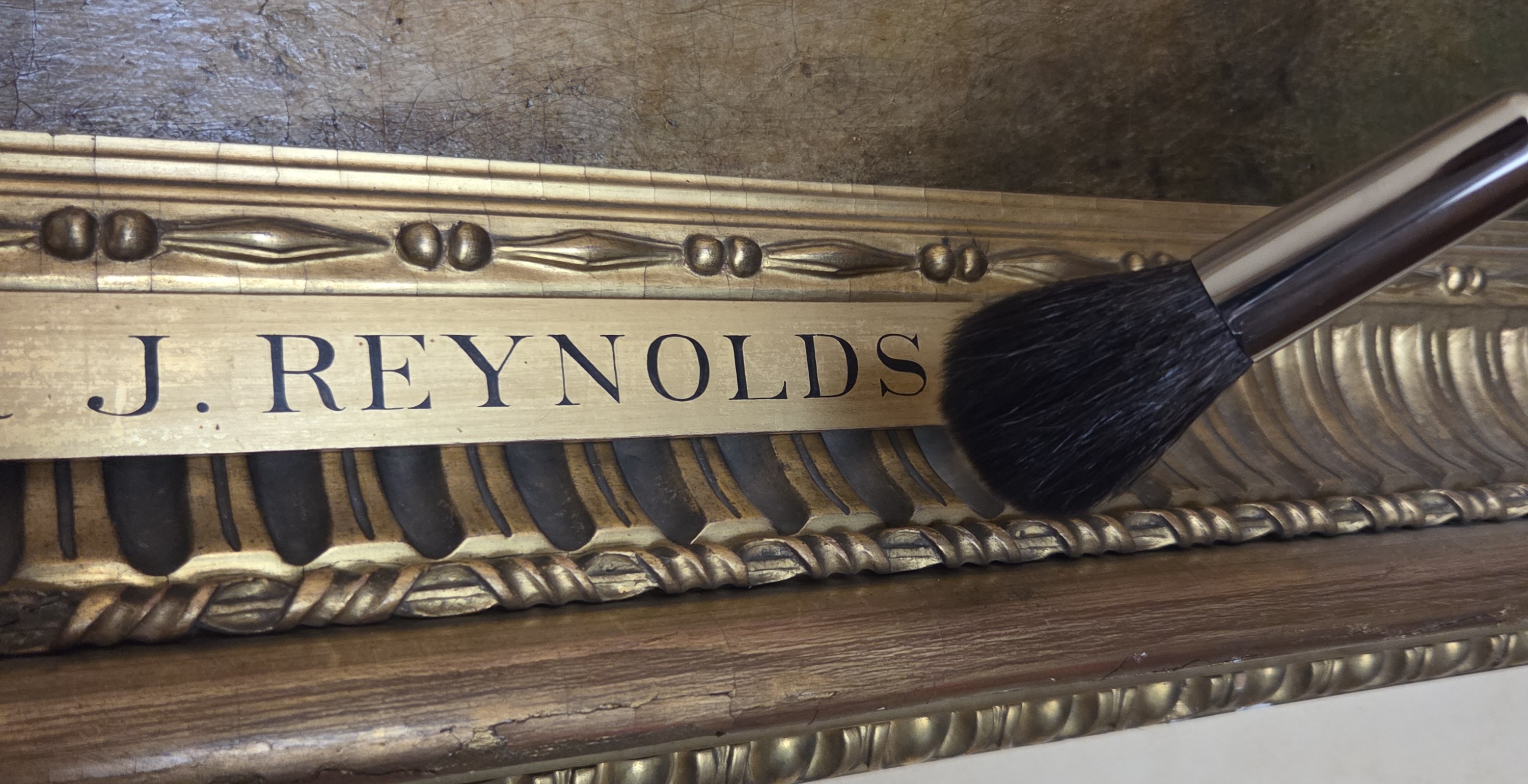
Gilded frames do not need to be cleaned often. Once a year, during a condition check, is enough. To clean them we use a range of specialist brushes. We use a soft pony brush if the frame is robust and in good condition. If the frame looks less stable or is showing signs of wear, we will use a soft badger brush, which combines softness with ‘springy’ hairs which are great for flicking dust. For fragile frames we will use a goat-hair brush or even a squirrel brush – which is softer still. Although squirrel is very soft, the hairs are not very springy, and we need to be careful not to ‘scrub’ with it. Frames that have started to present loose flakes are not suitable for even the softest brushes and so we must assess each one before we begin.
As we brush the dust from the frame, we try and flick it directly into a waiting vacuum cleaner. That way we can be sure that we are removing the dust from the space, rather than just spreading it around.
It is a job that we cannot rush and that needs our full attention, which is why we wait until we are closed for the winter. Hopefully, this means that the collection is looking its best for our visitors when we open up once again.